
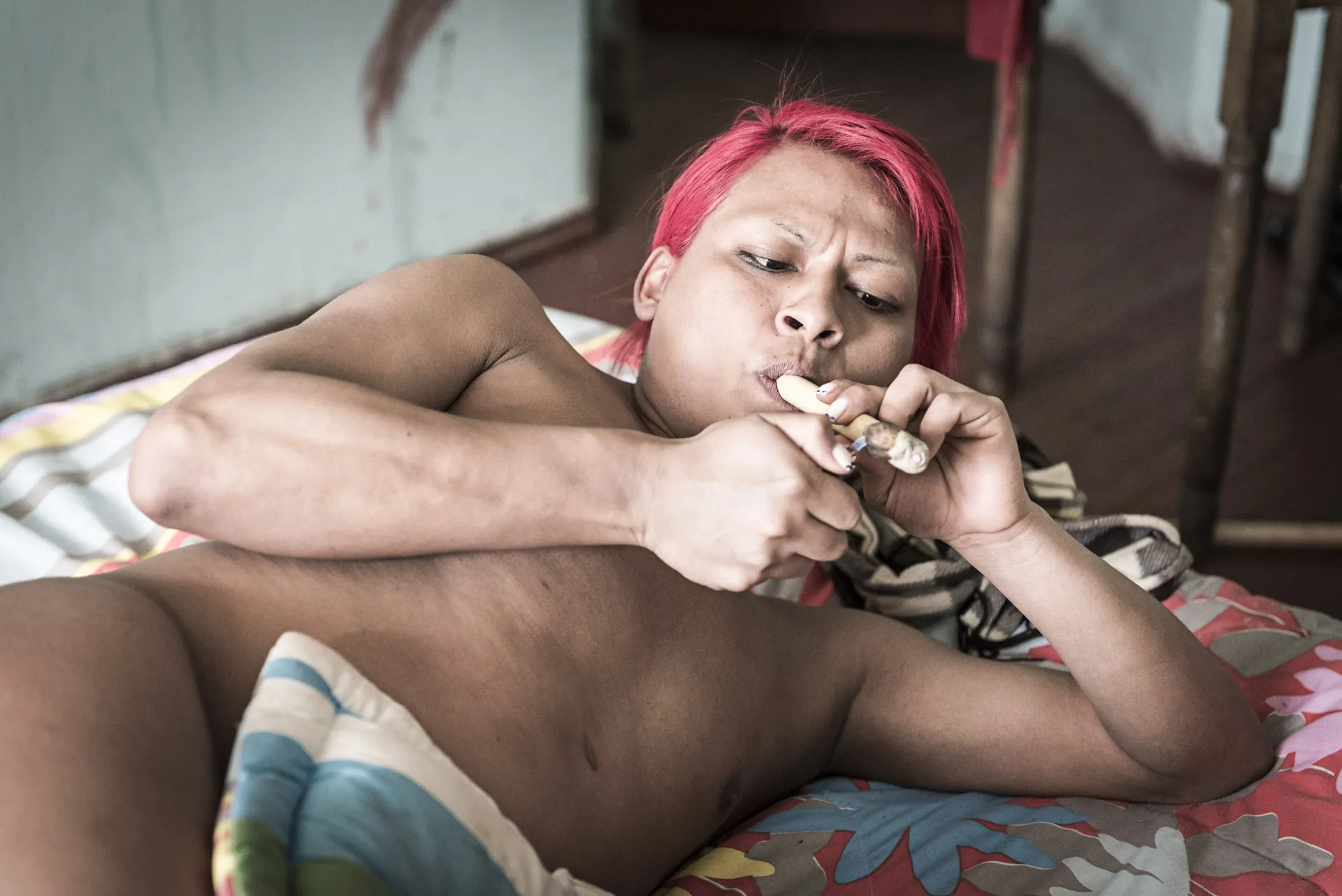
Santa Fé, once an upper class neighborhood in the center of Bogotá, has become one of the city’s red light districts. Within a few dense blocks, desire, commerce, and survival intersect. The streets are crowded day and night, functioning as an unofficial zone of tolerance for those who depend on sex work. Despite its reputation, Santa Fé operates according to its own fragile rules, offering a limited sense of safety within an environment shaped by exclusion and necessity.
Natalia and Arelis have built their lives within these fifteen blocks. Friends and coworkers, they were both born in rural villages in the Colombian highlands and assigned male at birth. In search of acceptance and the freedom to live openly as transgender women, they migrated to Bogotá, leaving behind communities marked by discrimination and violence. Like many transgender women across Colombia, they found work on the streets of the capital as a means of survival and independence.


Medical transition remains inaccessible for most. Hormone therapy and surgery are financially out of reach, forcing many to improvise their bodies in everyday ways. Arelis cannot afford hormones; she pads her bra with socks to shape a more feminine silhouette. These small acts are expressions of identity, resilience, and dignity within a life defined by constant negotiation.
This work focuses on the daily lives of Natalia and Arelis, portraying intimacy, vulnerability, and strength beyond stereotypes, inside one of Bogotá’s most contested spaces.


